- 7min read
- |
From Constant Hunger to Better Control: A Real Satiety Story How the Right Foods Help You Feel Full Naturally
Summary:
Many people trying to eat healthy feel trapped in a frustrating cycle. You eat breakfast, feel hungry again within an hour, snack through the day, crave sweets at night, and still wonder why weight loss feels impossible.
This is not always about lack of discipline. Often, it is a satiety problem.
Modern Indian eating patterns are heavily built around refined carbohydrates, quick snacks, sugary beverages, and low protein meals that fail to keep us feeling full after eating. As a result, hunger hormones stay elevated and cravings become harder to control.
The good news is that certain satiety foods naturally improve appetite control by influencing fullness hormones like GLP 1, CCK, and PYY. In this article, we will explain the science behind constant hunger, explore foods that reduce hunger naturally, and share practical Indian meal strategies that make healthy eating feel more sustainable and satisfying.

By Shailja Dubey
Lead Nutritionist– Prolicious

Table of Contents
- Why You Feel Hungry All the Time
- How Satiety Works
- The Satiety Index and Indian Foods
- Top Indian Foods That Reduce Hunger Naturally
- Protein and Satiety
- Fibre Rich Foods That Slow Digestion
- Meal Timing and Portion Strategy
- Indian Snacks That Reduce Hunger
- Lifestyle Habits That Improve Satiety
- Practical Everyday Takeaways
- FAQs
- Final Takeaway
Why You Feel Hungry All the Time: The Science Behind Cravings
Many people believe constant hunger is simply a willpower issue.
But biologically, hunger is strongly regulated by hormones and brain signalling.
One of the biggest hunger hormones is ghrelin. Ghrelin rises when meals are skipped, when protein intake is too low, or when meals digest too quickly.
This is extremely common in Indian eating patterns built around:
• biscuits and chai breakfasts
• white bread snacks
• maida based snacks
• low protein meals
• sugary tea or coffee
These foods provide quick energy but very little lasting satiety.
As blood sugar rises rapidly and falls soon after, hunger returns quickly. This often creates what many people describe as “food noise” constantly thinking about the next snack or craving something sweet despite eating recently.
The hypothalamus, the hunger control centre in the brain, continuously responds to these hormonal fluctuations.
This is why meals low in protein and fibre often fail to create lasting fullness.
How Satiety Works: Signals Your Stomach Sends to Your Brain
Satiety is the feeling of fullness and satisfaction after eating.
It is not only about stomach size or calories. It is a complex communication system between the gut and the brain.
When food enters the stomach, stretch receptors in the digestive tract send signals to the brain that food is being consumed. At the same time, hormones like CCK (cholecystokinin) and PYY (peptide YY) are released.
These hormones help slow digestion and signal fullness.
However, fast eating often bypasses this mechanism.
Many people finish meals within 5 to 10 minutes without allowing satiety hormones enough time to respond.
This is one reason mindful eating matters as much as food quality.

The Satiety Index: Which Indian Foods Score Highest
Not all foods keep you equally full.
The Satiety Index developed by Holt et al. compared how filling different foods are after eating.
Foods rich in protein, fibre, and water generally score much higher than refined carbohydrate foods.
For example:
High satiety foods:
• Moong dal
• chana
• Paneer
• oats
• curd
• sprouts
Lower satiety foods:
• white bread
• maida snacks
• sugary breakfast cereals
• fried packaged namkeen
This explains why two people eating similar calories may experience completely different hunger levels.
Meals containing protein and fibre digest slower and provide longer satiety duration.
Top Indian Foods That Reduce Hunger Naturally
Some foods naturally improve appetite control better than others.
The best satiety foods usually contain a combination of:
• protein
• soluble fibre
• resistant starch
• water content
Dals and Pulses
Moong dal, masoor dal, rajma, and chana provide both protein and fibre, making them highly effective foods that reduce hunger.
Millets
Ragi, jowar, and bajra contain fibre and digest slower than refined flour products.
Curd and Paneer
Protein rich dairy foods improve satiety hormone responses and help reduce cravings between meals.
Chia Seeds and Flaxseeds
Rich in soluble fibre, these absorb water and expand in the stomach, improving fullness.
The National Institute of Nutrition continues to emphasise the importance of balanced meals containing protein, fibre, and minimally processed foods.
Protein and Satiety: Why Dal Paneer Meals Work Better
Protein is one of the most satiating nutrients.
Compared to refined carbohydrates, protein triggers stronger and longer lasting satiety hormone responses.
This is why:
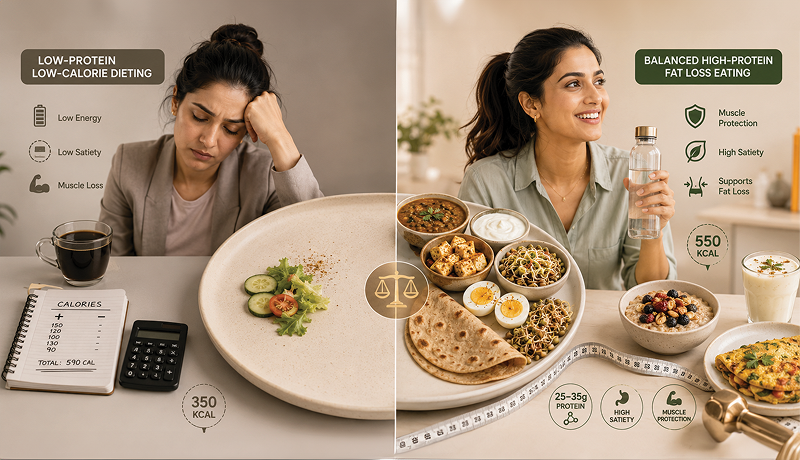
Two rotis with generous dal and paneer often keep people fuller much longer than four rotis with minimal sabzi.
Protein also slows gastric emptying, stabilises blood sugar, and reduces cravings later in the day.
Research referenced in the Indian Council of Medical Research dietary guidelines supports the importance of improving protein quality in Indian diets.
Many Indian meals are carbohydrate heavy but protein poor.
Simple upgrades like adding curd, paneer, sprouts, or extra dal can meaningfully improve fullness and appetite control.
Fibre Rich Indian Foods That Slow Digestion and Curb Appetite
Fibre works differently from protein, but together they create powerful satiety support.
Soluble fibre forms a gel like texture inside the gut, slowing digestion and extending fullness signals.
Foods naturally rich in soluble fibre include:
• Oats
• moong dal
• lauki
• chia seeds
• methi
• flaxseeds
Beta glucan in oats and soluble fibre from fenugreek have been associated with improved satiety and better glycaemic control.
This is why fibre rich meals often reduce evening cravings and mindless snacking.

Meal Timing and Portion Strategy for Better Hunger Control
Many Indian work schedules unintentionally worsen hunger patterns.
Skipping breakfast or surviving on chai and biscuits until afternoon often causes extreme hunger later in the evening.
This leads to:
• overeating at dinner
• late night snacking
• sugar cravings
• poor portion control
Instead of long gaps between meals, focus on balanced meals containing:
• protein
• fibre
• vegetables
• whole grains
A simple strategy is:
Breakfast
Protein + fibre based meal
Examples:
• moong chilla
• oats with curd
• vegetable poha with peanuts
Lunch
Dal, sabzi, roti, curd, salad
Evening Snack
Roasted chana, sprouts, or curd bowl
Dinner
Balanced portion with protein source included
Consistent meal timing helps regulate hunger hormones better throughout the day.
Indian Snacks That Kill Hunger Without Killing Your Diet
Snacking is not necessarily unhealthy.
The problem is that most packaged snacks are low in protein and fibre but very easy to overeat.
Better snack options include:
• sprouted moong salad
• roasted chana
• ragi crackers
• curd bowl
• fruit with nuts
• makhana with seeds
These foods combine fibre, protein, or water content to improve fullness without excessive calorie intake.
High satiety snacks make healthy eating easier because they reduce the urge to constantly snack mindlessly.
Lifestyle Habits That Make Satiety Foods Work Better
Food quality matters, but daily habits influence satiety too.
Eat Slowly
The body needs approximately 20 minutes to fully register fullness signals.
Drink Water Before Meals
Hydration may improve fullness and reduce overeating.
Sleep Well
Poor sleep increases ghrelin and cravings for high calorie foods.
Reduce Processed Food Exposure
Keeping highly processed snacks constantly visible at home increases mindless eating behaviour.
Small behaviour changes can dramatically improve appetite control over time.
Practical Everyday Takeaways
Prioritise Protein at Every Meal
Even simple additions like curd, dal, paneer, or sprouts improve satiety.
Build Meals Around Fibre
Add vegetables, fruits, seeds, and whole grains consistently.
Upgrade Breakfast
Avoid starting the day with only refined carbohydrates.
Snack Smarter
Choose foods that reduce hunger instead of triggering more cravings.
Slow Down While Eating
Mindful eating helps fullness hormones respond properly.
Avoid Long Gaps Between Meals
Balanced meal timing supports better hunger regulation.
Frequently Asked Questions
Which Indian food keeps you full the longest?
Meals containing both protein and fibre tend to provide the best satiety. Dal, paneer, curd, rajma, oats, sprouts, and millet based meals generally keep people feeling full after eating for longer.
How much protein per meal helps control hunger?
Most adults benefit from including a meaningful protein source at every meal such as dal, curd, paneer, sprouts, eggs, or legumes to improve satiety and reduce cravings.
Can millets like ragi and bajra reduce appetite?
Yes. Millets contain fibre and digest slower than refined grains, helping improve fullness and stabilise energy levels.
Is curd good for hunger control?
Yes. Curd provides protein and can improve satiety, especially when combined with fruits, seeds, or balanced meals.
Why do I feel hungry again one hour after eating rice?
Meals containing mostly refined carbohydrates without enough protein or fibre digest quickly, causing blood sugar fluctuations and faster return of hunger.
Does drinking water before meals reduce hunger?
Water before meals may improve fullness and help portion control, especially when combined with balanced eating habits.
What are the best hunger control snacks for office workers?
Roasted chana, sprouts, fruit with nuts, curd bowls, makhana, and protein rich high fibre snacks are practical options that improve satiety better than sugary or fried snacks.
Final Takeaway
Constant hunger is not always a discipline problem.
Very often, it is a meal quality problem.
Meals low in protein and fibre digest quickly, spike blood sugar, and leave the body searching for more food soon after eating.
Improving satiety is about building meals that work better with your biology.
Small changes like adding more dal, curd, paneer, vegetables, seeds, and fibre rich foods can help improve fullness, reduce cravings, and make healthy eating feel more sustainable long term.
Nutrition should not feel like a constant fight against hunger.
It should help you feel nourished, satisfied, and in control.
Start making smarter food swaps with more protein and fibre rich with Prolicious that help reduce cravings, improve fullness, and support sustainable healthy eating without extreme dieting.